The High-Stakes Secrecy of AI World Models: Why Industry Leaders Are Operating in the Dark Forest

The artificial intelligence industry is currently fixated on a frontier known as "world models"—systems designed to automate spatial intelligence, predict physical outcomes, and understand the mechanics of the real world. Yet, despite commanding massive valuations and heavy investor backing, the sector’s leading laboratories are operating under a veil of profound secrecy. At the center of this movement are prominent ventures like Yann LeCun’s AMI Labs and Fei-Fei Li’s World Labs. While both entities have generated immense market buzz, they currently rank low on traditional commercialization metrics, raising questions about how and when this theoretical technology will translate into profitable products.
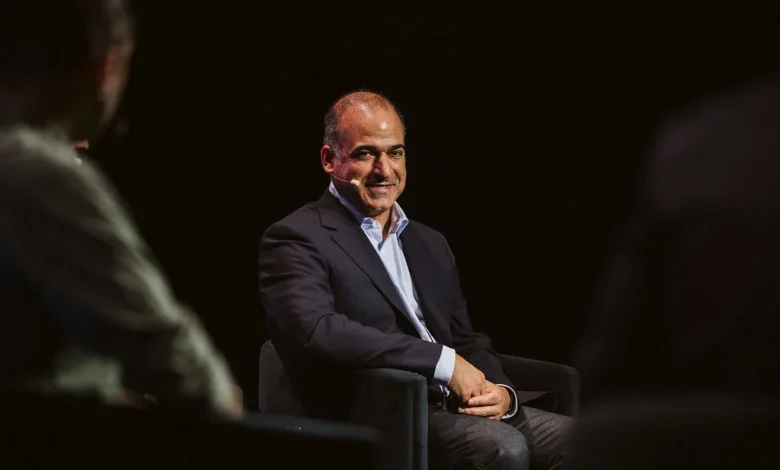
Moderating a panel on world models at the All In conference provided a firsthand look into this mysterious corner of the artificial intelligence landscape. The discussion quickly illuminated a striking paradox: while the underlying technology promises to revolutionize fields ranging from advanced robotics and interactive media to autonomous navigation, the actual commercial roadmaps of the companies building it remain closely guarded secrets.
Defining Spatial Intelligence and the Promise of World Models
To understand the current secrecy, one must first examine what world models aim to achieve. Traditional generative AI models excel at predicting the next token in a sequence of text or pixels. World models, by contrast, attempt to build a foundational understanding of physical reality—how objects move, interact, and occupy space.
At their core, these models are designed to automate spatial intelligence. This capability has vast implications across multiple industries. In autonomous driving, world models allow vehicles to anticipate traffic patterns and pedestrian movements more fluidly than traditional rule-based software. In robotics, they provide humanoid machines with the physical intuition required to navigate unstructured environments, handle fragile objects, and perform complex manual labor. Furthermore, in entertainment and digital media, world models can transform basic video inputs into fully explorable, interactive 3D environments suitable for video games, visual effects, and architectural simulation.
Despite these versatile applications, the commercial path forward remains foggy. The technological leap from processing massive datasets of spatial video to deploying reliable, revenue-generating enterprise software is steep, requiring safety guarantees and computational efficiencies that are still under development.
The Culture of Secrecy: Inside AMI Labs and World Labs
During the recent conference panel, the tension between massive funding and scarce public details became palpable. Michael Rabbat, co-founder of AMI Labs and the company’s vice president of world models, participated in the discussion but remained deliberately cagey when pressed about specific commercial products. Addressing the inquiry, Rabbat noted that the company would discuss its plans only when ready, later clarifying via email that AMI remains firmly in a research and building phase, intentionally withholding public timelines or product disclosures.
To be fair, AMI Labs is less than a year old, making a period of internal incubation standard practice for high-profile deep-tech startups. However, this reticence is an industry-wide phenomenon rather than an isolated corporate strategy.
World Labs, co-founded by computer science pioneer Fei-Fei Li, has experienced similar dynamics. Its primary product showcase, Marble, has yielded impressive demonstrations ranging from streamlined media creation to the generation of explorable environments for gaming and CGI production. While robotics use cases are frequently discussed, the platform’s public-facing demonstrations often function more as academic proof-of-concept exercises than ready-to-deploy enterprise tools.
The Impact on the Supply Chain
This pervasive secrecy extends beyond the laboratory walls, directly impacting the ecosystem of suppliers and data providers who feed these models. Alex de Vigan, CEO of Physicl, a specialized data supplier for the burgeoning world model sector, noted the operational challenges of working in the dark.
Speaking on the sidelines of the conference, de Vigan acknowledged that Physicl’s data has actively contributed to the development of these advanced models. Yet, he remains largely uninformed about the specific end goals of his clients. "I wish they would tell us more," de Vigan observed. "We could build more useful data if we knew what they were working on."
This dynamic highlights a friction point in the modern AI economy: while suppliers are well-capitalized through the heavy spending of AI labs, they often operate without the strategic clarity typically required to optimize supply chains and research pipelines.
Versatility as a Strategic Advantage and a Shield
The reluctance to commit publicly to a single vertical market stems largely from the extreme versatility of world models. The fundamental architecture of a world model can be adapted to dozens of distinct commercial sectors.
AMI Labs, for instance, has already explored intersections with manufacturing, biomedicine, advanced robotics, and clinical AI software through partnerships such as its collaboration with Nabia. It is statistically improbable that a single lab will successfully commercialize all these domains simultaneously. Yet, preserving optionality is a core survival strategy for early-stage startups.
In the current macroeconomic climate, securing venture capital for foundational AI research remains relatively frictionless. As long as fundraising is accessible, leadership teams face little immediate pressure to narrow their focus to a single profitable product line. In fact, narrowing that focus can be actively detrimental.
The Dark Forest of AI Competition
Announcing a specific product roadmap carries immense strategic risk. If AMI Labs or World Labs were to publicly declare the launch of a commercial humanoid robotics platform or a revolutionary Hollywood rendering engine, it would instantly alert competitors. Such an announcement would draw the immediate attention of rival world-model startups, well-funded neolabs, and tech giants like OpenAI and Anthropic.
This creates a classic game-theoretic dilemma. The same venture capital abundance that allows a lab to quietly research and develop advanced technology over several years is also funding dozens of potential rivals. Once a definitive path to market is exposed, those rivals can quickly pivot resources to contest the territory.
Consequently, maintaining absolute silence is the most effective defense mechanism available. In the terminology popularized by science fiction author Cixin Liu, this is a classic "dark forest" scenario: in an ecosystem populated by powerful, aggressive actors with unknown capabilities, the safest strategy is to conceal your presence, minimize your signature, and avoid attracting attention until you possess overwhelming force.
Implications and Future Outlook
As the world model sector matures, this phase of stealth development cannot last indefinitely. Investors will eventually demand quantifiable returns on the billions of capital deployed into labs like AMI and World Labs.
When these companies finally step out of the shadows and reveal their commercial strategies, the artificial intelligence landscape is likely to shift dramatically. Until then, the sector will continue to build behind closed doors—refining spatial intelligence, accumulating proprietary data, and waiting for the optimal moment to break cover in a hyper-competitive market.